
On this page
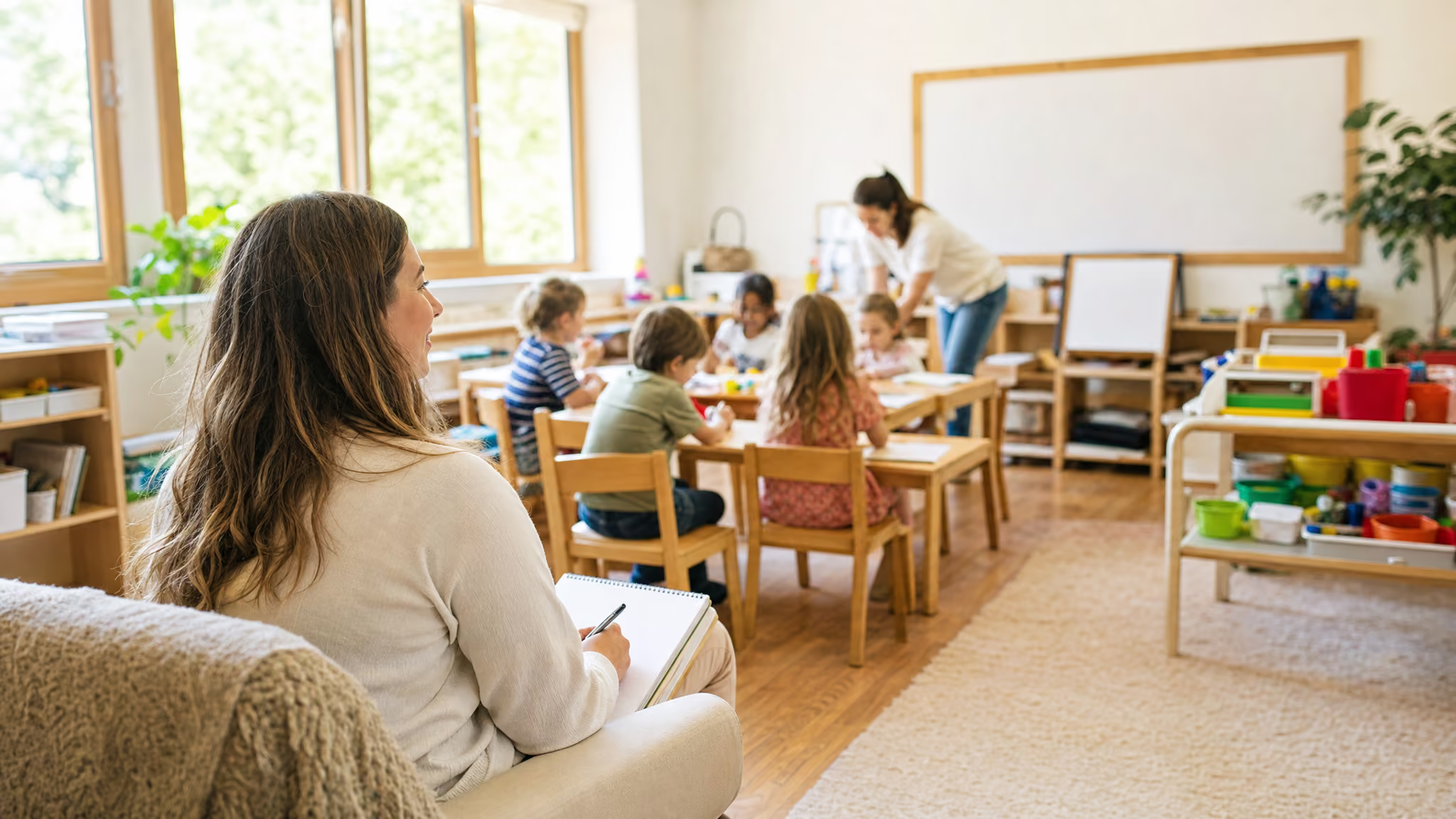
A new school year brings new teachers, new routines and new classmates. For children with autism, that much change can feel overwhelming, and for parents it can bring real worry. The right support makes a big difference. School-based ABA (Applied Behavior Analysis) brings proven, research-based teaching strategies into the school day, so children can feel safe, understood and ready to learn.
When implemented in the classroom, it can create a supportive learning environment tailored to your child’s unique needs.
This article describes school-based ABA in general. For how Peak’s Wyoming school partnerships differ from ABA therapy a family arranges for their own child, see School-based ABA with Peak below.
What is ABA therapy in a school setting?
Imagine the classroom as a magical garden.
School-Based ABA Therapy is like the gentle gardener, nurturing each child’s unique growth. It’s about creating a learning environment where every child feels safe, understood, and excited to learn.
By focusing on individual needs, ABA helps children blossom and reach their full potential.
But what does this actually look like in a classroom?
ABA therapy in a school setting is about creating a structured and predictable environment where children can thrive. It involves breaking down complex tasks into smaller, manageable steps. For example, if a child struggles with math problems, an ABA therapist might break down the problem into smaller steps, providing visual aids and positive reinforcement.
School-based ABA therapy also focuses on teaching functional skills. This means helping children learn skills that they can use in everyday life. For instance, teaching a child how to ask for help, follow directions, or take turns with peers are all valuable skills that can be taught using ABA principles.
Another important aspect of ABA in schools is behavior management. By understanding the function of challenging behaviors, therapists can develop strategies to reduce or eliminate them. This creates a more positive and inclusive classroom environment for everyone.
Ultimately, the goal of school-based ABA therapy is to equip children with the tools they need to be successful learners and independent individuals. It’s about creating a foundation for a lifetime of learning and growth.
Here’s an example of how ABA therapy might be used in a classroom setting:
Let’s say a child has difficulty raising their hand in class to ask questions. An ABA therapist might work with the child to develop a plan.
- First, the therapist would identify the target behavior, which is raising their hand to ask a question.
- Then, they would break down the behavior into smaller steps, such as making eye contact with the teacher, leaning forward in their chair, and raising their hand.
- The therapist would then teach the child these steps through positive reinforcement. For example, they might praise the child for making eye contact with the teacher or for raising their hand even if they don’t ask a question right away.
- Over time, with practice and reinforcement, the child will be more likely to raise their hand in class to ask questions.
This is just one example of how ABA therapy can be used in a school setting. There are many other ways that ABA can be used to help children with autism succeed in school.
How is school-based ABA used in the classroom?
Picture the classroom as a bustling playground.
ABA is like a friendly coach, guiding children through the game of learning. It’s about turning lessons into fun adventures. Teachers and therapists work together to create a world of learning where every child feels successful.
For example, if a child finds it tricky to share toys, ABA might turn playtime into a cooperative game. Or, if quiet time is challenging, ABA can transform it into a cozy reading nook. It’s all about making learning fun and engaging.
ABA can also be used to teach essential academic skills in a fun and interactive way.
For example, if a child is struggling with reading, ABA might involve using picture cards and rewards to make learning exciting.
Or, if a child finds math challenging, games and manipulatives can be used to make numbers come alive.
Additionally, ABA helps create a predictable and structured classroom environment. This can be especially helpful for children with autism who thrive on routine. Visual schedules, timers, and clear expectations can help children understand what to expect throughout the day, reducing anxiety and increasing independence.
By focusing on individual needs and creating a positive learning environment, ABA empowers children to reach their full potential.
It’s about building confidence, fostering friendships, and creating a love for learning that lasts a lifetime.
What role does ABA play in school-based transition services?
Transitions can feel like stepping into the unknown.
But with ABA as your trusty compass, navigating these changes becomes an exciting exploration. By teaching kids how to cope with new routines and environments, ABA helps them feel confident and prepared.
It’s like giving children a backpack filled with helpful tools for their journey.
ABA therapists work closely with teachers and families to ensure a smooth transition, making sure every step feels like a small victory.
For example, when transitioning from preschool to kindergarten, ABA can help children learn new routines, such as lining up for lunch or following classroom rules. Visual schedules and social stories can be used to help children understand what to expect and feel more comfortable in their new environment.
As children get older, ABA can support them in transitioning to middle school or high school. Teaching organizational skills, time management, and study habits can help them succeed academically. Additionally, ABA can help develop social skills and independence, preparing them for life after high school.
By providing consistent support and teaching essential life skills, ABA empowers children to embrace new challenges and thrive in their ever-changing world.
What does ABA school mean?
An ABA school is like a magical land where learning comes alive!
It’s a place where children with autism are celebrated for their unique strengths. Every day is a chance to grow, learn, and make new friends.
ABA schools are like supportive families, where everyone works together to create a nurturing environment. It’s a place where children feel safe to explore their world and discover their passions.
In an ABA school, the curriculum is designed to meet the specific needs of children with autism. The focus is on building essential life skills, such as communication, social interaction, and independence. The environment is structured and predictable, providing a sense of security and routine.
ABA schools also emphasize individualized instruction and support.
Teachers and therapists work closely together to create personalized learning plans for each child. This ensures that every student has the opportunity to reach their full potential.
Ultimately, the goal is a classroom where children can thrive and grow into confident, capable learners.
School-based ABA with Peak
Peak’s school-based work comes in two different forms, and they are paid for differently:
- School partnerships (Wyoming only). Peak partners with Wyoming schools and districts on school services: staff training, IEP collaboration, functional behavior assessments, and classroom systems. These are arranged and funded through the district — not through family insurance — and are not currently available in Idaho. School and district teams can request school services.
- ABA therapy for your own child (family-funded). If you’re looking for ABA for your child, that runs through family intake and your insurance, usually as in-home or center-based therapy. Occasionally Peak may support an individual client at school with special permission, paid by that family’s insurance — but that is not the same as school services. Start at Get started.
Start early, start strong
The best preparation for school often starts years before kindergarten. Children who receive Early Intensive Behavioral Intervention (EIBI) in the toddler and preschool years build the communication, play and learning-readiness skills that make classrooms easier. That is why EIBI is Peak’s specialty, led by a team of 15 Board Certified Behavior Analysts with doctoral-level clinical oversight.
Every child is different, and you don’t have to figure out school on your own. Families can get started with Peak, and school and district teams in Wyoming can request school services.