
Getting started

What to Expect with ABA Therapy

If your child was recently diagnosed with autism — or you're still figuring out whether ABA is right for your family — it's normal to have more questions than answers. Here's a plain, honest walkthrough of what ABA therapy actually looks like at Peak, from the first phone call to everyday sessions.

What happens in ABA therapy?

ABA (Applied Behavior Analysis) is a therapy that helps children build the skills that make daily life easier — communicating, playing with other kids, handling big feelings, and growing more independent. A Board Certified Behavior Analyst (BCBA) designs a plan built entirely around your child's own goals, and a trained Behavior Technician works with your child one-on-one to reach them. It isn't one-size-fits-all: everything is tailored to your child and adjusted as they grow.
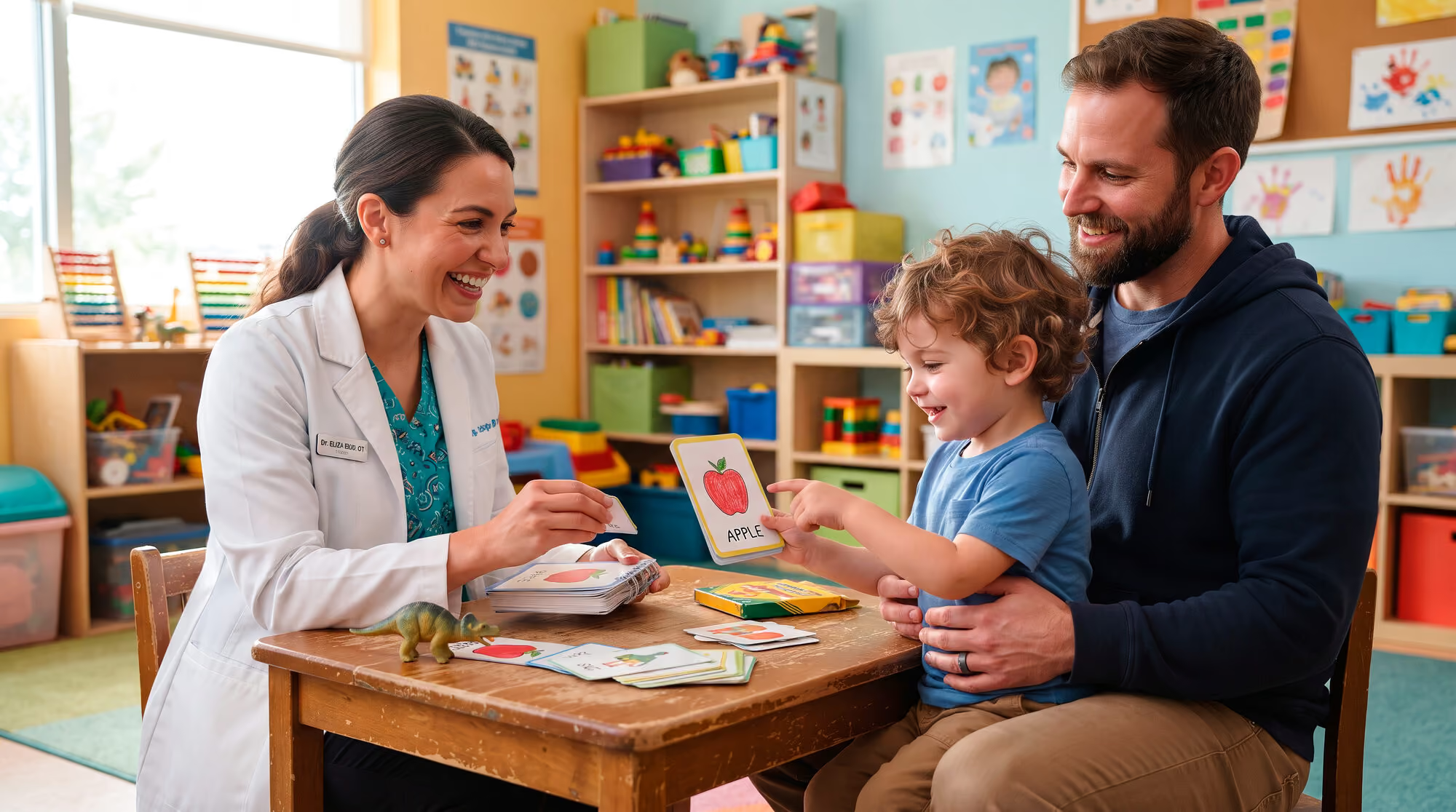

A smiling clinician holding a deck of picture cards across a low table from a young boy on his father's lap, in a bright playroom lined with toys, books and children's artwork.

What does a typical session look like?

Most of a session looks like play — because for young children, play is how learning happens. Your child works one-on-one with their Behavior Technician on specific goals, woven into games, toys, and everyday activities your child enjoys. The technician follows the plan the BCBA built, keeps track of how your child is doing, and keeps things positive and encouraging throughout. Sessions happen in your home, in one of our centers, or both — wherever your child learns best.

An adult pushing a laughing child along the floor in a round basket chair, in a bright playroom full of plants and toys.

How many hours a week — and how long does ABA take?

It depends on your child. After an assessment, your BCBA recommends a number of weekly hours based on your child's needs and goals — some children do well with a focused, part-time schedule, while others benefit from more comprehensive support. The right amount is a clinical decision, and it's also covered by your insurance plan's authorization. ABA is not forever: the goal is always to build lasting skills and step support down over time as your child progresses.

Focused ABA

Targeted support for specific skills, often around 10–20 hours a week.

Comprehensive ABA

Broader early-intervention support, often 25–40 hours a week.

These are typical ranges. Your BCBA recommends the right level for your child after an assessment, and it's set to what your insurance authorizes.

What happens at intake — the first appointment?

Getting started is simpler than most parents expect. You reach out with a few basics about your child. We review the information, check your insurance coverage, and talk with you about next steps. From there, your BCBA completes an assessment to understand your child's strengths and needs, then builds their individual plan. We'll walk you through each step — you won't be left guessing what comes next.

Two parents and their toddler and preschooler lying together on the floor of a bright, sunlit playroom, laughing over an open picture book.

How do you measure progress?

Every child gets a standardized assessment at the start, and again as therapy continues, so progress is measured — not guessed. Your Behavior Technician collects data in every session, and your BCBA reviews it regularly to see what's working and adjust the plan. You'll get regular updates, so you always know how your child is doing and what you're working toward together.

Four children in brightly colored raincoats and rain boots walking into school side by side under rainbow, star and polka-dot umbrellas, laughing.

Do parents participate?

Yes — and it matters. The families who see the most progress are the ones who are part of it. We provide regular parent training so the skills your child builds in therapy carry over to home, school, and everyday life. You don't need any special background — just a willingness to be part of your child's team. We'll teach you the rest.

A mother laughing with her toddler at home as they play with colorful balloons, the child's hair standing on end with static.

See how we measure progress

Still have questions? That's exactly what we're here for.

Send us a few details about your child and a member of our team will follow up directly.

Wyoming 307‑212‑3284Idaho 307‑257‑5487info@pkbehavior.com

Get started