
On this page
When you notice your child is developing differently, it’s natural to feel a mix of worry, love and urgency all at once. You want to know what will actually help, and you want to know soon. Early intervention ABA is one of the most effective answers available, and timing is a big part of why.
What is early intervention ABA?
ABA (Applied Behavior Analysis) is the science of how children learn, used to build the skills they need for everyday life. Early intervention ABA simply means starting that support in the first years of life, usually between ages 2 and 6, and often right after a diagnosis.
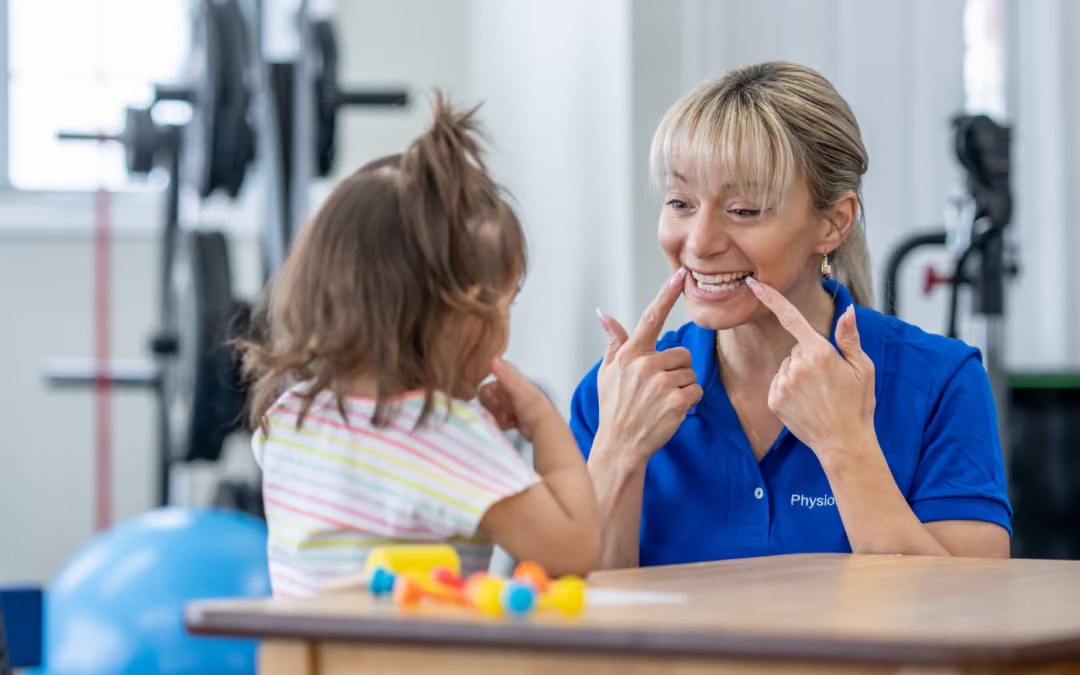
In practice, it looks a lot like play. A therapist finds what your child loves, like bubbles, cars, music or tickles, and uses it to teach one small step at a time:
- Saying or signing “more” to get another turn on the swing.
- Pointing to show you an airplane, then looking back to share the excitement.
- Waiting for a turn, handing over a toy, joining a simple game.
- Using a calm-down strategy instead of a meltdown when plans change.
Every success is celebrated, so learning feels good and kids want to keep going.
Why the early years matter so much
A young child’s brain is building connections faster in the first five years than at any other point in life. Skills learned in this window, like first words, back-and-forth play and following simple directions, become the foundation for everything that comes later, from preschool to friendships.
That’s why experts, including the American Academy of Pediatrics, encourage families to start evidence-based intervention as early as possible rather than waiting to see if a child “grows out of it.” Decades of research, beginning with Dr. Ivar Lovaas’s 1987 study at UCLA, show that young children who receive early, intensive ABA tend to make larger gains in language, learning and daily living skills.
The most comprehensive form of this is Early Intensive Behavioral Intervention (EIBI), typically 25–40 hours a week of one-to-one therapy. It’s our specialty, and we explain it in depth in What is ABA therapy, and why does starting early matter so much?
What does early intervention ABA work on?
A good program works on the whole child, not one skill at a time:
- Communication: first words, requests, answering questions, starting conversations.
- Social and play skills: sharing, turn-taking, pretend play, playing near and with other kids.
- Emotional regulation: handling frustration, transitions and big feelings.
- Daily living: eating, dressing, toileting and following routines.
- Learning readiness: sitting for a story, following directions, copying others, the skills that make preschool and kindergarten go smoothly.
Three ways to get early intervention
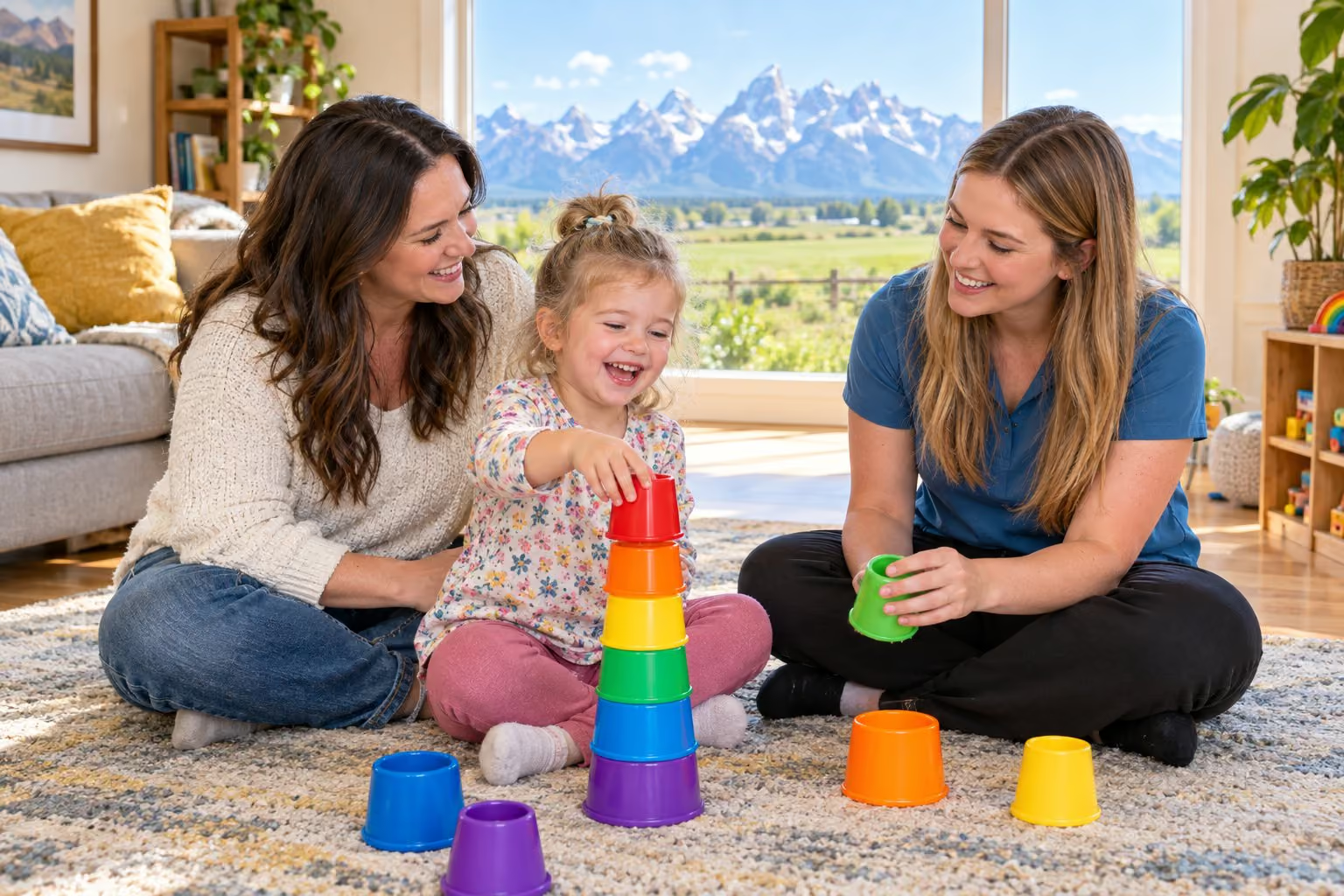
- At home. In-home ABA brings therapy into your child’s own routines, like mealtime, bath time and play in the living room, so new skills show up right where your family needs them.
- In a clinic. Center-based ABA gives your child bright, play-filled rooms, structured learning and other kids to practice social skills with.
- Both. Many families combine the two for the best of both worlds.
There’s no one-size-fits-all answer. Your BCBA will help you choose based on your child’s needs and your family’s schedule.
What an early intervention day can look like
Picture snack time. Your child reaches for crackers, and the therapist gently prompts a word or sign for “cracker.” The moment it comes, the crackers do too. Later, a game of rolling a ball back and forth becomes practice in turn-taking and eye contact. At the end of the day, you learn the same strategies so you can use them at dinner tonight.
Hundreds of small moments like these, repeated and celebrated, are how big skills are built.
How Peak does early intervention differently
- EIBI is the heart of what we do. Our programs are built for the early years, with the intensity the research supports.
- Expert oversight. Our team includes 15 Board Certified Behavior Analysts (BCBAs) with doctoral-level clinical oversight. Every child’s program is designed and supervised by a BCBA.
- One-to-one therapy. Your child works with a Registered Behavior Technician (RBT) trained and supervised by that BCBA.
- Parents are partners. Parent training is built in, so progress carries over to home, the grocery store and bedtime.
- Close to home. Clinics in Laramie, Cheyenne and Rock Springs, Wyoming, and Idaho Falls and Rexburg, Idaho, plus in-home services. Find a location.
Common questions
What is early intervention ABA therapy?
It’s ABA therapy that starts in the early years, usually ages 2 to 6. It breaks big skills into small, fun steps so your child can build communication, play, social and self-care skills during the years when the brain is growing fastest.
How early can my child start?
As soon as there is a diagnosis. If you don’t have one yet, our team can guide you through the diagnosis process and connect you with trusted evaluators.
Where does early intervention ABA happen?
At home, in a clinic with other children, or a combination of both. The best choice depends on your child’s needs and your family’s routine.
Is early intervention ABA the same for every child?
No. Every child gets an individual assessment and a personalized plan, and the plan changes as your child grows.
Does insurance cover it?
Many health plans cover ABA for autism, though benefits vary. We’ll check your coverage for you. See the insurance plans we accept.
Don’t wait and see
If something is telling you your child needs support, trust it. The earlier your child starts, the more you can accomplish together, and you don’t have to figure it out alone.
Get started with Peak and we’ll walk you through your next steps, including your insurance. You can also read what to expect with ABA therapy.