
On this page
You’ve decided ABA therapy is right for your child. The next question almost every family asks: should therapy happen at home or at a clinic?
The good news is there’s no wrong answer. Both settings use the same evidence-based methods, and both can deliver the intensive, early support that makes the biggest difference. Here’s how they compare.
In-home ABA therapy
Therapy comes to you, inside your child’s everyday life.
What families love:
- Real routines, real results. Skills are taught right where they’re needed: getting dressed, mealtimes, brushing teeth, playing with siblings.
- Comfort. Many children engage faster in a familiar place.
- Parents see everything. You watch strategies in action and practice them with coaching, so progress keeps going between sessions.
- No drive. Helpful for busy families and younger siblings’ schedules.
Things to consider:
- Distractions. Homes are busy, though a good therapist uses everyday moments as teaching opportunities.
- Fewer peers. Practicing play and social skills with other kids takes more planning.
- Space and schedule. Someone needs to be home, and a small, clear play area helps.
Learn more about in-home ABA at Peak.
Center-based ABA therapy
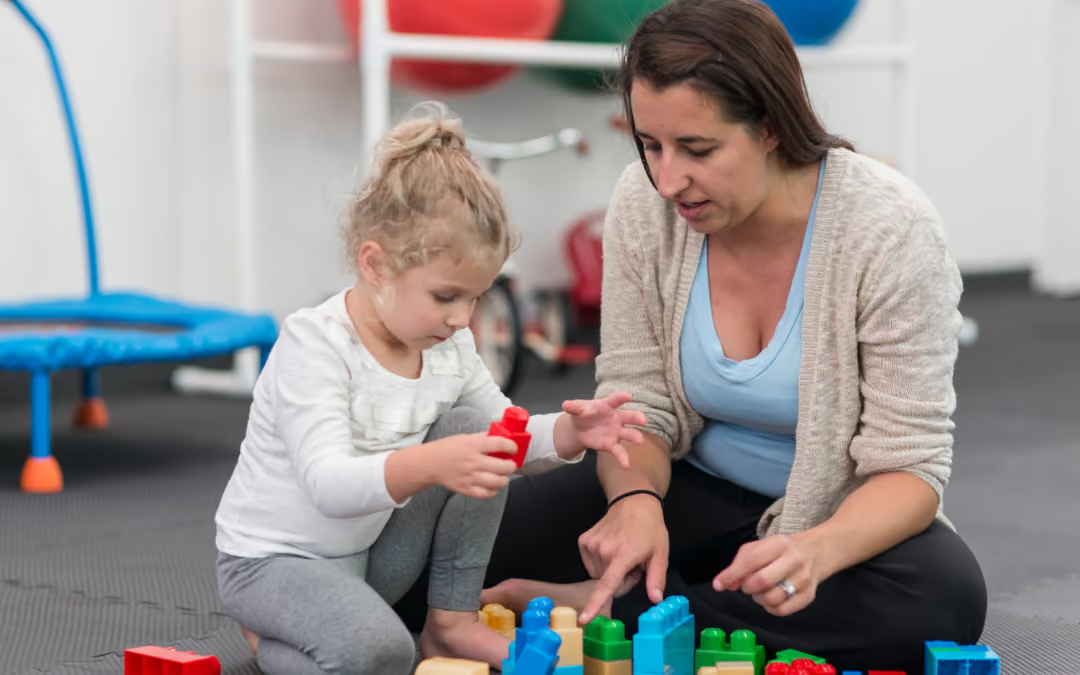
Your child comes to a clinic designed from the ground up for learning.
What families love:
- Built for learning. Bright, organized therapy rooms with materials and equipment most homes don’t have.
- Peers to practice with. Children can work on sharing, turn-taking and group play with other kids, great preparation for preschool and kindergarten.
- Structure and intensity. A clinic makes it easier to deliver a full, comprehensive program with consistent routines.
- More clinical eyes. BCBAs and the wider team are on site, so support is close at hand.
Things to consider:
- Adjustment time. A new place can take a few sessions to feel comfortable.
- Travel. You’ll need to get your child to and from the clinic.
- Bringing skills home. Parent training helps make sure clinic skills show up at home too.
Learn more about center-based ABA at Peak.
Quick comparison
| In-home | Center-based | |
|---|---|---|
| Best for | Daily-living skills, home routines | Social skills, school readiness, structure |
| Peers | Siblings and family | Other children at the clinic |
| Parent involvement | Built into every visit | Through parent training |
| Travel | None | To and from the clinic |
How to choose
Ask yourself:
- What are our biggest goals right now? Morning routines and mealtimes point toward home; playing with peers points toward the center.
- What will my child need next? If preschool or kindergarten is coming up, the center can help prepare them.
- What does our week realistically look like?
Many families combine both, for example clinic sessions for social skills plus home sessions for routines. Your BCBA can help you design the mix.
Whichever setting you choose, starting early matters most. Read why in our guide to Early Intensive Behavioral Intervention.
Why families choose Peak for either setting
- Same team, same standards. Our 15 BCBAs, with doctoral-level clinical oversight, supervise programs at home and in the clinic. Meet our team.
- Five clinics in Laramie, Cheyenne and Rock Springs, Wyoming, and Idaho Falls and Rexburg, Idaho, plus in-home services in our surrounding areas. Find a location.
- Parent training built in, wherever therapy happens.
Common questions
Is one setting more effective than the other?
Both use the same ABA methods. What matters most is the quality of supervision, the number of hours, how early your child starts and whether the setting fits their goals.
Can we switch settings later?
Yes. Many children start in one setting and add or move to another as their goals change.
Does insurance cover both?
Coverage depends on your plan. We check your benefits for you. See the insurance plans we work with.
Take the next step
Not sure which setting fits? Tell us about your child and we’ll help you decide.