The hours outside session
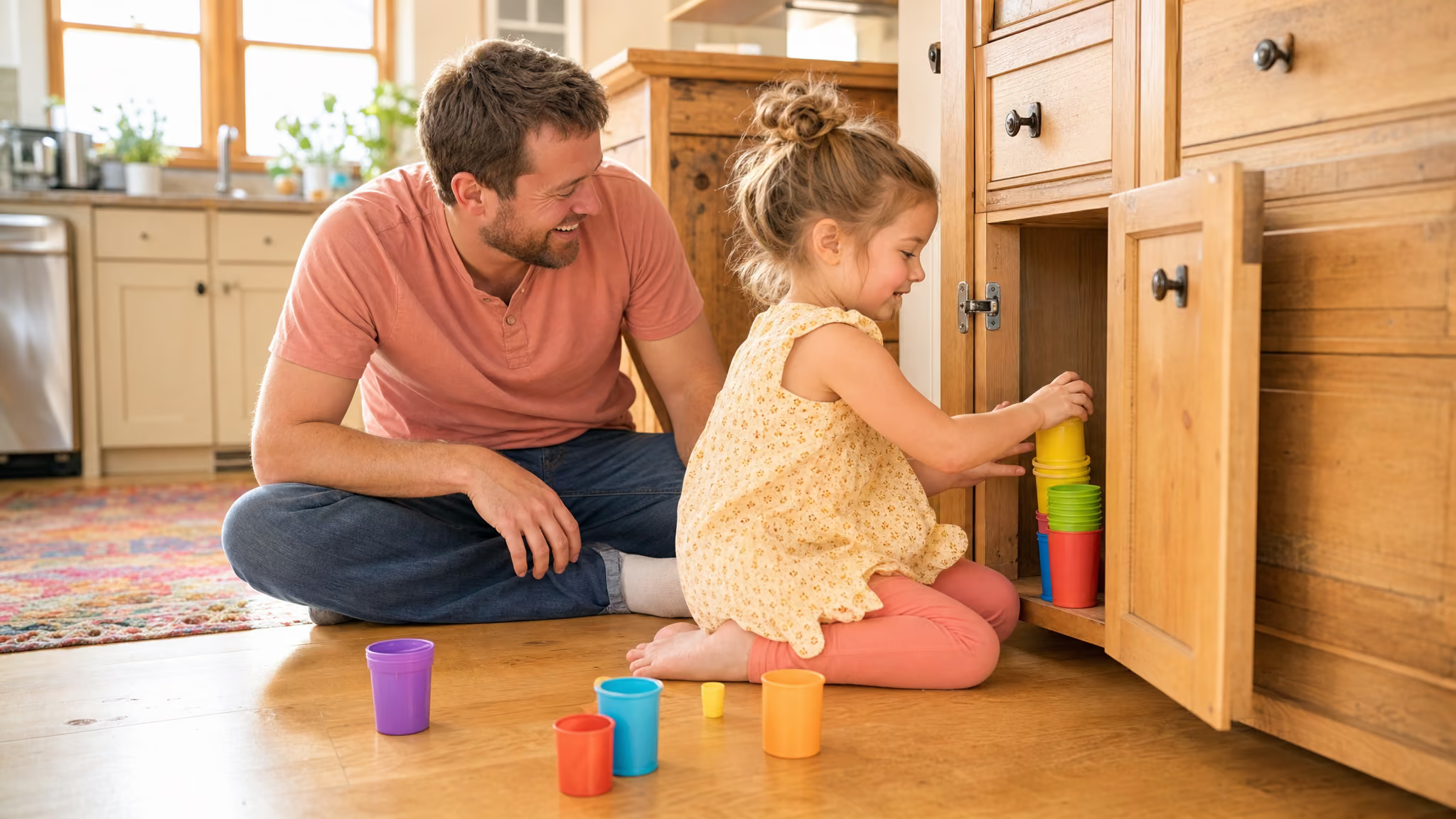
A week has 168 hours. However many of them your child spends in therapy — a few focused hours or a comprehensive program — the large majority of the week happens somewhere else: at your table, in your car, at the park, at bedtime.
That is not a problem. It is the point. A skill practiced with one adult in one room is not finished — it is started. Whether it shows up at dinner, with grandparents, or in the grocery store depends on the people who are there for the rest of the week. That is you. Parent training is how the progress your child makes in session becomes progress everywhere else.
What training looks like in practice
It is not homework, and it is not a lecture. A typical parent training session has three parts:
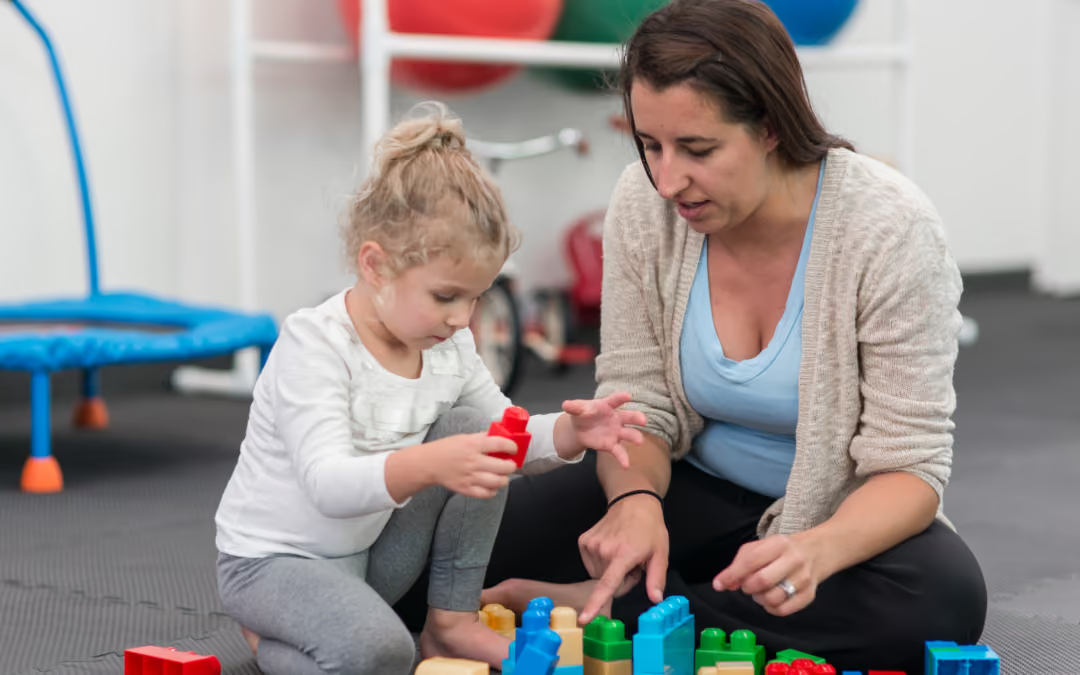
- Modeling. Your child’s therapist shows you the strategy with your child, live — not a description of it, the thing itself.
- Practice with feedback. You try it during the session, while someone who does this every day watches and adjusts. The first try is supposed to be clumsy. That is what the session is for.
- Troubleshooting a real routine. You pick the moment that is actually hard at your house — mealtimes, transitions, bedtime — and the plan gets built around that, not around a textbook example.
You do not need any background for this, and you cannot get it wrong in a way that matters. Families who practice between sessions see skills carry over faster — and telling your therapist what did not work is exactly as useful as telling them what did. For how parent training fits into the bigger picture, see what to expect with ABA therapy.